Making friends is only one part of social skills.
But social skills are much more than that. They are everyday skills used to interact with people.
What Are Social Skills?
Social skills help us communicate, build relationships, and navigate everyday interactions. They include the ability to1:
- Start and maintain reciprocal conversations
- Take turns, share, and cooperate with others
- Understand and express appropriate facial expressions and body language
- Understand and consider another person’s thoughts and feelings (perspective-taking)
- Solve problems
- Adapt to change
- Build and maintain meaningful friendships
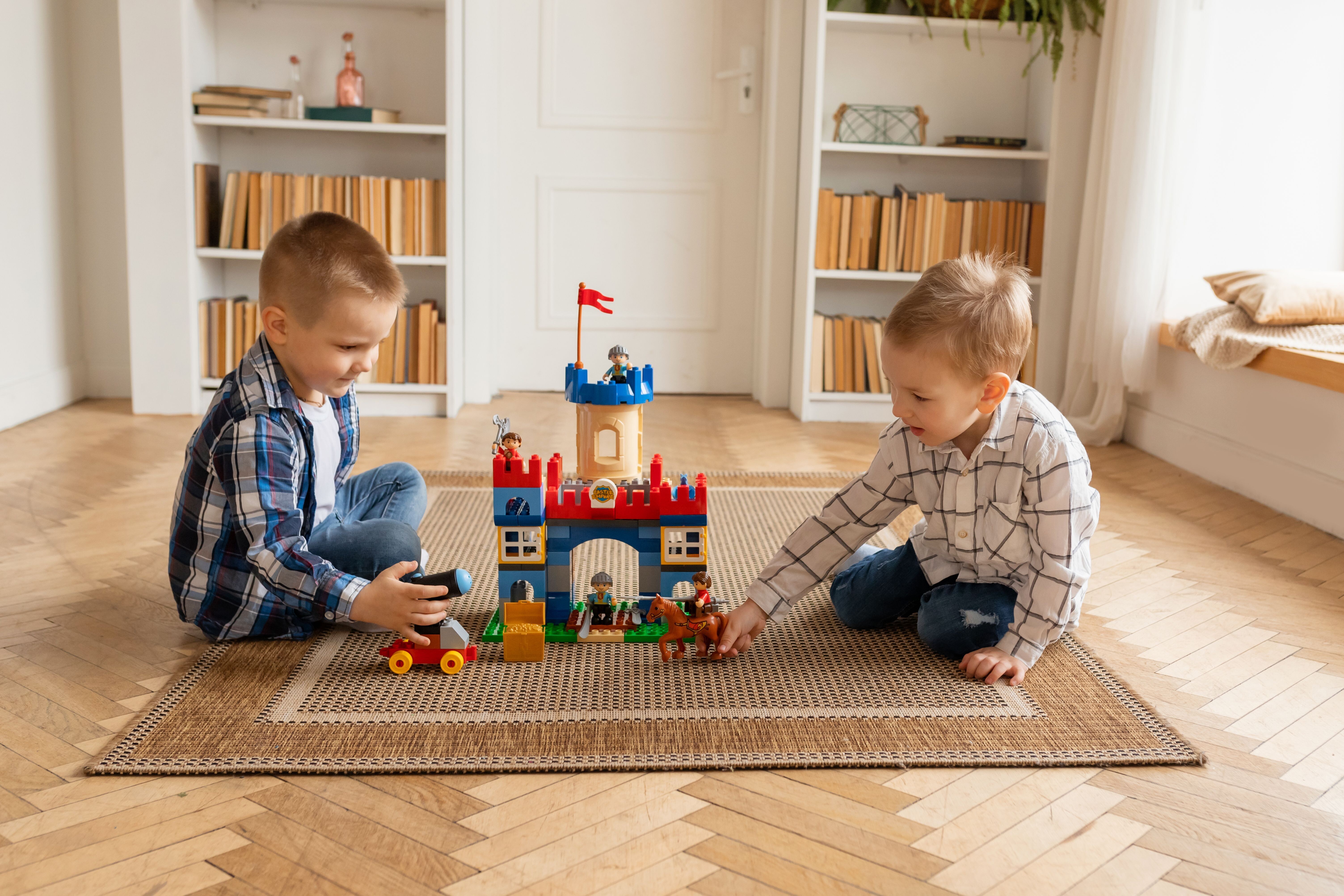
The Building Blocks of Social Skills
Successful social interactions require children to use many developmental skills at the same time. It includes2:
Communication
Children use communication skills to express their thoughts, feelings, wants, and needs while participating in conversations with others.
What this might look like: A child may ask a peer a question, listen to their answer, and ask a follow-up question rather than walking away.
Perspective-Taking
This skill helps children put themselves in someone else's shoes and understand that other people may think or feel differently than they do.
What this might look like: If a friend does not want to play the same game, your child understands that it does not mean their friend does not want to play with them. Instead, they can recognize that their friend may simply have a different preference.
Emotional Regulation
Managing emotions helps children stay calm during disagreements, cope with disappointment, and recover when things don't go as planned.
What this might look like: When a child loses a game, they may feel disappointed, but they can take a breath, accept the outcome, and continue playing.
Flexible Thinking
Flexible thinking helps children adapt when plans change, games don't go as expected, or unexpected situations arise.
What this might look like: If a planned trip to the park is cancelled at the last minute, your child can adjust to the change and consider another activity instead.
Problem Solving
Problem-solving helps children work through everyday challenges, resolve conflicts, and find solutions with others.
What this might look like: If two children want the same toy, they can work together to find a solution, such as taking turns or playing with it together.
The Importance of Social Skills
When one or more of the building blocks of social skills is challenging, children may find it harder to navigate social situations, build meaningful friendships, and feel confident interacting with others.3
Social skills help children:
- Build friendships
- Participate in group activities
- Work as part of a team
- Communicate their needs
- Develop confidence
- Navigate everyday situations successfully
Strong social skills don't just help children make friends, they help them succeed at home, at school, and in their community.
You're Not Alone
Every child develops social skills at their own pace. Some children learn them naturally through everyday experiences, while others benefit from additional guidance and practice.
If you have concerns about your child's social development, our team is here to help. Contact us to learn more about our social skills services and how we can support your child.
References
1. Little, S. G., Swangler, J., & Akin-Little, A. (2017). Defining social skills. In Handbook of Social Behavior and Skills in Children (pp. 9–17). Cham: Springer International Publishing. https://doi.org/10.1007/978-3-319-64592-6_2
2. Jurevičienė, M., Kaffemanienė, I., & Ruškus, J. (2012). Concept and structural components of social skills. Baltic Journal of Sport and Health Sciences, 3(86). https://doi.org/10.33607/bjshs.v3i86.266
3. McClelland, M. M., & Scalzo, C. (2006). Social skills deficits. In M. Hersen (Ed.), Clinician's Handbook of Child Behavioral Assessment (pp. 313–334). Elsevier Academic Press. https://doi.org/10.1016/B978-012343014-4/50014-9



Get Started
We’ll help you understand your options and guide you through next steps.
BOOK A FREE CALL